*This post MAY contain affiliate links. That means that if you make a purchase after clicking on a link I may earn a small commission at no extra cost to you. I don’t ever recommend something that I don’t use myself. Not all links are affiliate links. For more information, see our Privacy Policy.
To print this page, click the green Print button below the article. If that doesn’t work, try Ctrl + P (or Flower + P) to bring up the printer dialog box.
Using a Quilt Panel
Quilt Panels can make clever quilts – here is a tutorial with lots of suggestions and ideas.
Has this ever happened to you? You walk into a quilt shop and see the most wonderful panel. Maybe it’s a great cheater print, a large-scale repeat, or just the perfect panel you need to make a baby quilt at the last minute. You can’t wait to use it in just the most creative project ever seen. But… you don’t buy it. You can’t think of a creative project on the spot and the shop doesn’t seem to have any patterns that work. You walk out disappointed.
You don’t have to be. Preprinted quilt panels can make quick and easy quilts, perfect for that last-minute baby quilt. They can be quite elaborate too, featuring not only the panel but related blocks and borders. It all depends on the panel, the borders, and your own creativity. Here are 21 ideas for creating a work of art using a preprinted quilt panel, large-scale fabric, or border print.
Here’s a tip: Even though that panel is long out of print, you can still use the pattern to create your own panel quilt. Be aware that fabric panels may come off the bolt skewed or not quite the size required by the pattern. You may need to trim the panel to the proper size if it is too large or add a coping strip to all four sides if the panel is too small.
For more details, read the article “Preparing a Quilt Panel.“
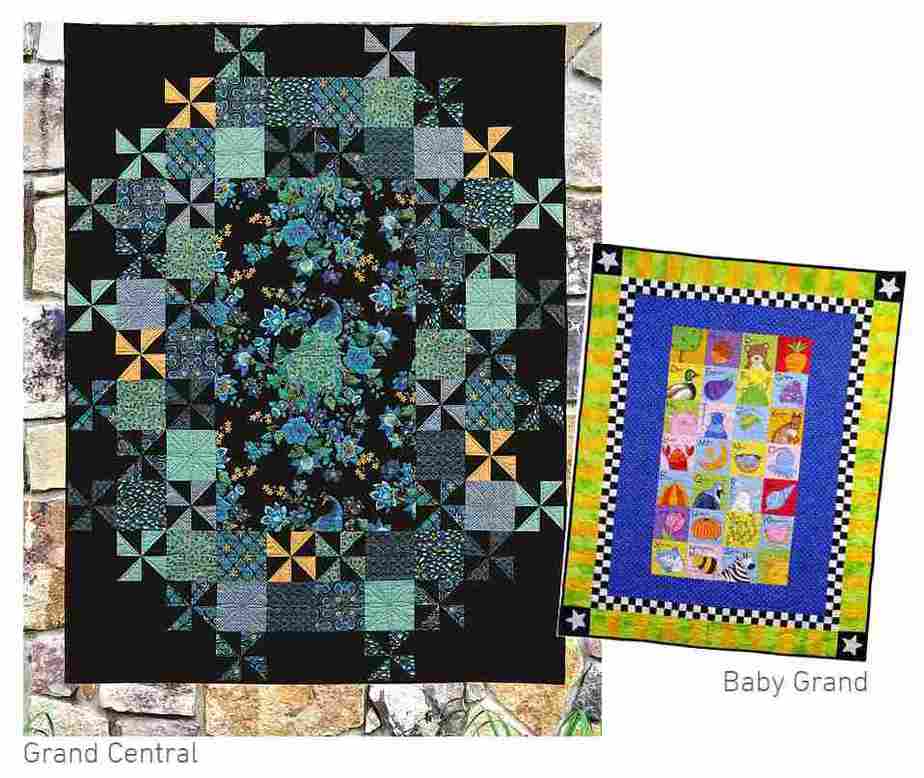
1. Center the Panel in Plain Borders
This is the easiest panel quilt to make. Just add borders to the tops and sides and you are done! You could add more than one border if you like, or piece a border with some simple like a four-patch. It helps when the manufacturer has a large border print that goes with the panel. The Autumn Harvest quilt below was made with a simple large border.
 |  |  With Love Quilt of Valor |
 Scenic Snowfall |  |  |
 Dancing with the Wind by Dottie Moore |  Seasons Greetings |  |
 |  |  Bobbin in Quilts |
 Quilting with Panels and Patchwork Book |  Enchanted Plumes |  Retro Rockets |
 Picture submitted by Patty B |  Picture submitted by Patty B |  November Night |
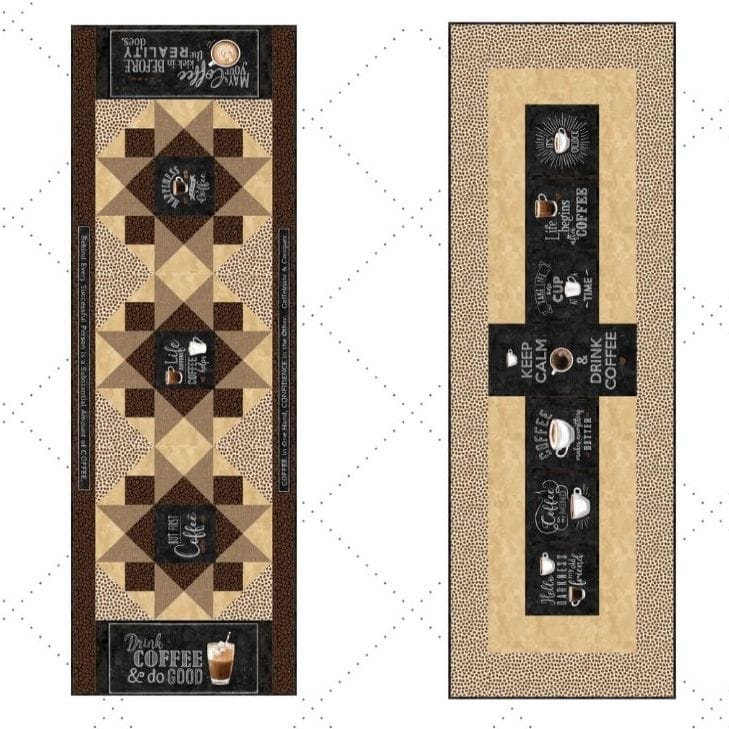
2. Center the panel using elaborate borders with fabric, wide borders, or blocks fitting the theme.
If your LQS carries a particular panel, there might be a border print that goes with it. If not, start looking at border print or striped fabric to see if it can be used with a panel that you really like. For example, here are several by Timeless Treasures and Hoffman.
 Find Bear Panels here Call of the Wild has two plain borders but the bottom border is Bear Paw Blocks. |  Find Halloween Panels Here |  Order a tree panel here All that Glitters |
 Find Halloween Panels Here |  Mary’s Violet Eyes |  Merry and Bright Quilt Panel |
 Fun with Panels |  Boudoir Dress |  Timeless Treasures |
3. Off-Center the Panel Using Plain Borders
 Apex |  Arles |  Ankenny |
 Find Barn Panels Here |  Snowy Friends by Wilmington |  Sidelights by Mountain Peek Creations |
4. Off-center the panel using elaborate borders with fabric, blocks, or applique along the side
 |  Cubby Holes |  Asian Symbols Quilt Pattern |
 Quilt of Valor Pattern |  Colorblock This quilt uses an offset large scale border |  |
 Modern Bouquet |  From the Smiles Too Loudly blog |  from Hoffman |
5. Framing Smaller Blocks
 Happy Hubby |  Sophisto Cat free pattern from Kaufman |  from Sylvia Pippen |
 Bear Mountain |  Made With Love |  Birds of a Feather |
6. Attic Windows
 Glimpse of Home |  Rose Arbor |  Beach Haven |
 Window on the East |  Bluebirds Panel |  Pathway through my garden by Ellen B |
7. Cut it up
 Dino Rocks |  CeCe’s Challenge Quilt (no pattern) |  Paper Doll Park |
8. Shadow Frame (Drop Shadow)
 Dr. Seuss in a Drop Shadow Quilt |  Drop Shadow Collage |  Layers Quilt Pattern |
9. A Blooming Panel
It starts in the middle and builds out from there. All borders relate to the center in color, style, or theme.
 Blooming Rails |  Garden Party |  Bouquet for Nana |
10. Small blocks of different sizes
Many panels come with smaller blocks – off to the side, or on the top and bottom. The question is: how do you use those blocks in a quilt, especially if they end up being different sizes? Here are some suggestions.
 |  |  |
11. Scatter small blocks in a sampler
 Labrador Buddies |  Fight Like a Girl by Denise B (this is a Windham Fabric) |  ABC-123 Baby Quilt Pattern |
12. Smaller blocks set into rows
 Metro Quilt Pattern |  |  |
13. Fracture the quilt – both horizontal and vertical
 Majestic Mountain Quilt |  Find a Beach Panel Here |  The Outlaw Biker Quilt Tutorial |
 Liberty Stars |  Reflections using a Robert Kaufman Panel |  Slashed Panel |
14. Surround Small Blocks with Sashing

She pieced the alternate blocks.


15. Set on the Diagonal


16. Horizontal panels with thin borders on both sides


17. Cut the panel so it fits a related opening or other design


18. Make a triptych


(no pattern)

Meadow Stars by Patti Carey Designs
19. Quilts with related smaller blocks or blocks of different sizes


20. Use small blocks as an alternate block or in a nine-patch or four-patch small quilt.

I used a wide border print as if it were a small panel to create Strolling Geese. (The picture shows a selvage to selvage view.) It was much too wide to be an outer border, so I cut it in half and used it as if it were a solid piece of fabric in the quilt. I designed the pattern to be used as a tutorial for different methods of making Flying Geese blocks.